 l’autre bande dessinée

Ashura
Figurant en bonne place dans le livre Manga Zombie d’Udagawa Takeo, George Akiyama y est présenté comme «le roi inarrêtable du trauma manga». Ashura, en particulier, fut d’ailleurs l’occasion de son premier scandale — lorsque, venant tout juste de conclure sa série de gag-manga Horafuki Don-Don dans les pages du Shûkan Shônen Magazine, il enchaîne dans le numéro suivant (en Août 1970) avec le premier chapitre de ce récit qui s’ouvre sur une série de scènes d’anthropophagie.
Faisant forte impression avec ce démarrage en fanfare, George Akiyama continuera à confirmer sa réputation sulfureuse l’année suivante, en inaugurant sa série des Kokuhaku («Confessions») dans le Shûkan Shônen Sunday (en Mars 1971) qui enchaîne les affirmations les plus provocatrices (dont «j’ai tué quelqu’un») pour les démentir la semaine suivante, sans forcément dissiper totalement les doutes. Enfin, une partie des thèmes évoqués dans Ashura se retrouvera également dans Zeni Geba, autre série publiée au même moment.
Car Ashura se présente comme un récit brut et sans concession, dans lequel on trouvera fort peu de moralité au profit des nécessités inhérentes à la survie. L’histoire se déroule dans le Japon médiéval, même si aucune indication de date ni de lieu ne viendra préciser les choses.[1] Tout ce que l’on saura, c’est que c’est une période de grand dénuement, alternant sécheresses et famines.
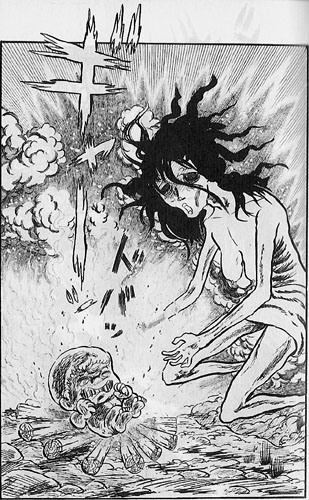
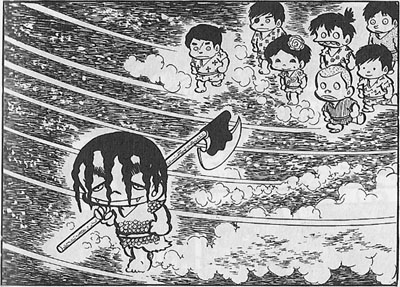
Le fameux premier chapitre s’ouvre ainsi sur un paysage de cadavres, et présente une jeune femme enceinte qui, pour survivre, va défendre chèrement sa peau et consommer de la chair humaine. S’il s’agit de vie ou de mort, la situation se complique lorsqu’elle accouche enfin, et que le problème de la nourriture (jusqu’alors entièrement tourné vers la naissance de l’enfant) demeure. A tel point que, dans un moment de folie, elle finira par jeter son fils dans le feu dans le but de le manger. Miraculeusement, l’enfant s’en sortira, et c’est donc la trajectoire de cette petite créature difforme, livrée à elle-même, que l’on va suivre au fil de ses pérégrinations.[2]
Si cette entrée en matière a de quoi marquer les esprits, la suite n’apportera pas vraiment de rédemption, s’attachant (comme l’indique le quatrième de couverture) à explorer ce dont l’homme est capable dans ses moments les plus sombres.
Histoire sans doute d’accentuer plus encore la situation de détresse de ses personnages, George Akiyama met en scène la destruction de la cellule familiale, qui doit être habituellement le ciment de la société Japonaise. La disparition de la première famille rencontrée par Ashura prend alors un tour symbolique — le seul survivant, Tarômaru, jouant le rôle du pendant civilisé d’Ashura, dans une rivalité qui perdurera jusqu’à la fin du récit, et qui verra finalement la civilisation ployer et rejoindre le sauvage. La famille disparaissant, restent les enfants qui, sensément porteurs d’avenir, vont plutôt se révéler porteurs de mort.
Les rares figures parentales que l’on croisera dans cette histoire se partagent alors entre les endeuillés devant la mort de leur progéniture (tel Jitô-sama, père du Kojirô dont le meurtre déclenchera la chasse donnée à Ashura) ou les indifférents qui n’y voient qu’une éventuelle source de profit (comme Sanjo Daiyû, géniteur d’Ashura, ou dans une moindre mesure le père de Wakana). Pas de sentimentalisme, on endure et l’on accepte avec fatalité les coups du sort, alors que violence, privations et injustice continuent de s’abattre sur les plus démunis.
Au milieu de cette nature (humaine et autre) impitoyable, Ashura ne fait montre d’aucune morale, d’aucun remord — et même si l’on peut lire au fil des pages les indices d’une infime repentance, il n’y aura pas d’excuse. Même les méthodes radicales de l’énigmatique figure du moine-mendiant n’auront pas de résultat évident. Porteur du péché originel de sa mère, et bien que passé par les flammes[3] ou lavé par les pluies torrentielles, Ashura n’y trouvera aucune rédemption. Au contraire.
Avec son groupe d’enfants plus ou moins livrés à eux-mêmes dans un contexte de survie, on pourrait faire un parallèle entre Ashura et le Hyôryû Kyôshitsu (L’Ecole Emportée) d’Umezu Kazuo, qui est postérieur à ce récit, ayant été publié en 1975. Si l’on y retrouve la même volonté d’explorer les recoins sombres de l’âme humaine, chez Umezu, c’est finalement la raison qui l’emporte sur le monstre qui pourrait sommeiller en chacun de nous. Chez Akiyama, à cette inquiétude se substitue une certitude : chacun est un monstre, l’horreur est brute et viscérale — et revêt finalement la banalité de la survie au quotidien. Redoutable.
Notes
- Quelques indications vestimentaires pourrait situer ce récit entre l’époque Heian (794-1185) et le Sengoku-jidai (autour du 15e siècle), avec peut-être une préférence pour cette dernière, période de conflit interne quasi-permanent qui causa beaucoup de famines dans le pays. Mais je ne suis pas un spécialiste, et les indices sont maigres…
- A noter que le nom que lui donnera sa mère, «Ashura», désigne également dans le bouddhisme une déité subalterne, que l’on pourrait aussi associer à un démon. Un nom dont la graphie en kanji (le titre du livre étant écrit en katakana) comporte en lui shura, qui signifie «carnage». On le voit, tout un programme…
- Dont on pourrait supposer que, dans une référence à Achille, Ashura aille y puiser la source de son apparente invulnérabilité.

 Zeni Geba









Super contenu ! Continuez votre bon travail!