 l’autre bande dessinée

Igarashi Daisuke
Avec son trait fragile, ses histoires doucement magiques et la nostalgie d’un Japon d’un autre temps, Igarashi Daisuke est l’un des auteurs que l’on a pu découvrir dans la revue IKKI, véritable laboratoire d’exploration de l’éditeur Shôgakkan. Bien sûr, contrairement à toute attente, c’est avec un débit incroyablement rapide qu’Igarashi Daisuke, petit bonhomme énergique et volontaire, va répondre aux questions hésitantes posées par cet interviewer. Rencontre, en express.
Xavier Guilbert : Depuis combien de temps êtes-vous manga-ka ?
Igarashi Daisuke : Cela doit faire plus d’une dizaine d’années. Voyons voir, depuis 1993 ? Donc oui, quinze ans.
XG : Et c’était quelque chose que vous souhaitiez ?
ID : Oui. Enfin, au départ, j’étais très attiré par le dessin, et puis … quand je dessinais un paysage qui m’avait ému, avec une seule illustration, il m’était difficile de faire passer un message. Ce qui fait que j’ai eu très vite envie d’ajouter d’autres images — et puis pour retranscrire les changements, puisque lorsque l’on utilise ses yeux, ce sont les changements auxquels on s’attache, petit à petit je me suis rapproché de la bande dessinée.
XG : La nature semble être un thème récurrent et important dans votre travail. D’où êtes-vous originaire ?
ID : Je … en fait, je suis né à Saitama, dans la banlieue de Tôkyô.
XG : Alors d’où vient cette intérêt pour la nature, à l’opposée de l’urbanisme, que l’on retrouve dans tous vos livres ?
ID : Dans la ville où je vivais, il y avait un vieux temple. Et dans ce temple, il y avait un petit bois avec des arbres plusieurs fois centenaire, et tout les jours je passais un peu de temps là-bas, pour jouer. Et — comment dire ? Quand je jouais tous les jours au milieu de ces arbres, j’étais frappé par leur beauté, et je voulais voir si j’étais capable de retranscrire cette beauté. C’est comme ça que j’ai commencé.
XG : Vous avez fait vos débuts avec Hanashippanashi,[1] qui est un recueil d’histoires courtes, alors qu’ensuite vous vous êtes tourné vers des récits plus longs. Cela correspond-il à une confiance croissante en vous ?
ID : Au départ, je … en fait, quand j’ai commencé à faire de la bande dessinée, je me suis demandé vers quel style je voulais utiliser, quels thèmes je pouvais le mieux évoquer. C’est cette raison qui m’a fait me tourner vers le style d’histoires courtes d’Hanashippanashi. J’ai continué cela pendant deux ans, et c’est alors que je me suis rendu compte qu’il y avait des choses que je ne pouvais pas traiter de cette façon. C’est pourquoi j’ai décidé de me tourner vers des récits plus longs, d’aller chercher d’autres choses en moi, et de voir si je pouvais les exprimer. Et c’est comme ça que j’en suis venu à faire des récits plus longs.
XG : En lisant Hanashippanashi, il y a une vision de l’enfance qui m’a beaucoup rappelé GoGo Monster de Matsumoto Taiyô. Et bien sûr, l’attachement à la nature évoque aussi les travaux de Miyazaki Hayao. Ces deux auteurs vous ont-ils influencé ?
ID : Pour ce qui est de Miyazaki Hayao, bien sûr, c’est … comme j’ai vu ses films depuis que je suis enfant, je pense qu’il y a une influence, sans nul doute. Pour ce qui est de Matsumoto Taiyô, en fait — jusqu’à récemment, je n’avais rien lu de lui, ce qui fait je ne crois pas qu’il m’ait influencé. Ceci étant, j’avais vu ses dessins et c’était un style qui me plaisait beaucoup, mais je n’avais rien lu de lui. Donc non, pas d’influence venant de lui. Mais le dessin de Matsumoto Taiyô est à la fois très élégant, mais de plus les histoires sont intéressantes. Et je pense que c’est assez rare au Japon, et j’ai beaucoup de respect pour lui.
XG : Dans Hanashippanashi, on trouve également beaucoup d’attachement à la shita-machi,[2] est-ce que c’est quelque chose dont vous auriez la nostalgie ?
ID : Pour l’ambiance que l’on trouve dans Hanashippanashi, je me suis basé sur les lieux que j’aime. Et en particulier, la ville où j’ai grandi, la ville où mes parents ont habité, les endroits que j’ai pu visiter et qui me plaisaient, j’ai mis tout cela dans Hanashippanashi. Et donc … ceci étant, progressivement, la ville où je suis né a changé, et les endroits que j’aimais ont petit à petit disparu. Et j’ai donc voulu en garder le souvenir dans mes livres.
XG : Pour Majo,[3] vous situez l’histoire dans un pays qui, même s’il a quelques points communs avec le Japon ancien, est quand même très différent. Pourquoi ce changement ?
ID : En effet, j’aime beaucoup le Japon ancien, comme par exemple les matsuri,[4] et je suis allé un peu partout dans le Japon pour en voir. Et même si le climat change beaucoup, depuis Okinawa où il fait très chaud, jusqu’au Tôhoku où il fait très froid, j’ai remarqué que toutes ces matsuri gardent un fond commun, des choses similaires. J’ai commencé par me demander pourquoi, et en cherchant en comparant avec les célébrations d’autres pays du monde, je me suis rendu compte que beaucoup partageaient la même essence. Et — comment dire ? Peut-être que, il y a très longtemps, il y avait une sorte de communauté qui partageait une même façon de penser, à travers le monde. Et c’est ce que j’ai voulu faire, en essayant de parler d’un autre pays que le Japon.
XG : Toujours dans Majo, les personnages principaux sont féminins, et porteurs de magie. A l’inverse, les personnages masculins sont destructeurs et s’intéressent à la science. C’était une opposition voulue de votre part ?
ID : J’ai l’impression qu’en effet, les femmes sont plus proches des choses de la nature. Bien sûr, il y a le fait que ce sont elles qui donnent naissance aux enfants, mais de manière traditionnelle, les femmes ont toujours été plus proches. Et c’est donc pour cela que j’ai choisi des personnages masculins pour représenter leur pendant moins positif.
XG : Est-ce que vous vouliez aussi faire référence aux légendes traditionnelles du Japon, avec en particulier les transformations des renards, le plus souvent en femme ?
ID : Tout-à-fait. Dans le Japon d’autrefois — mais c’est peut-être aussi le cas ailleurs — les shamans étaient souvent des femmes. Et je pense que pour moi, cette image était très forte.
XG : Il y a deux ans, vous avez participé au collectif Japon, pour lequel vous avez réalisé une histoire parlant du Japon traditionnel. C’était une commande ? Qu’en retirez-vous ?
ID : Eh bien, comme l’idée c’était de parler de notre région, et que j’habitais alors dans le Iwate-ken,[5] on m’a demandé de faire une histoire sur Iwate. J’ai commencé à réfléchir à ce que je pourrais raconter sur le Iwate-ken, et bien sûr j’ai envisagé de faire quelque chose de contemporain. Mais au même moment, j’ai appris que pour le collectif Japon, un certain nombre d’auteurs Français étaient venus au Japon et devaient parler de leur expérience ici. Et donc, forcément, parler du Japon contemporain. Et c’est pour cela que j’ai alors choisi de me tourner vers quelque chose de plus ancien, qu’un visiteur d’aujourd’hui ne pourrait pas voir.
XG : C’est l’approche qu’ont choisi pratiquement tous les auteurs Japonais du recueil, ce qui fait que l’on a une impression de nostalgie, presque.
ID : Ils ont sans doute eu la même réflexion que moi. Que comme les Français allaient parler d’aujourd’hui, autant faire quelque chose de différent.
XG : Avec Little Forest,[6] vous produisez une sorte de «guide de la vie à la campagne». Est-ce basé sur une expérience personnelle ?
ID : En effet, je suis parti habiter pendant trois ans dans le Iwate-ken, dans une petite ville de la campagne profonde. Et là, j’ai dû me débrouiller pour travailler dans les champs et les rizières. Et c’est une expérience qui m’a beaucoup plus, et j’ai voulu la partager.
XG : Et votre éditeur a accepté ce projet sans problème ?
ID : En fait, pour le projet de Little Forest, c’est alors que je parlais de partir habiter dans ce genre de région que mon éditeur m’a proposé de faire un manga sur le sujet.
XG : D’ailleurs, vous êtes actuellement publié dans IKKI, qui est un espace assez particulier dans le paysage japonais. C’est donc une liberté, pour vous ?
ID : Tout-à-fait. Je dirais qu’on me laisse faire pratiquement ce que je veux.
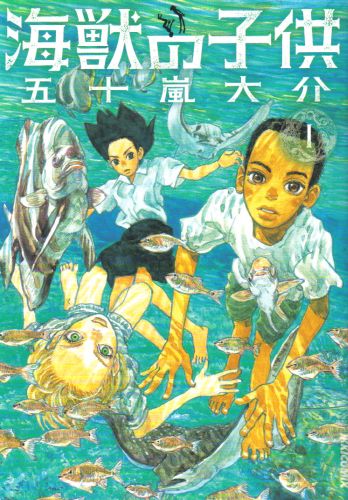
XG : Votre dernier travail en date est Kaijû no Kodomo, y retrouve-t’on les mêmes thèmes liés à la nature ?
ID : Kaijû no Kodomo est une histoire autour du thème de la mer. C’est l’histoire d’une jeune fille du Japon actuel, qui va rencontrer des jeunes garçons qui ont été élevés par des dugongs. Et en rencontrant ces deux garçons, elle en viendra à découvrir les mystères de la mer.
XG : C’est encore une histoire de découverte de la nature ?
ID : Oui, j’avais envie de montrer la beauté, la grandeur et la profondeur de la mer.
XG : Une fois de plus, c’est quelque chose qui correspond à une aspiration de votre part ? Vous n’êtes pas exactement un edokko,[7] mais presque…
ID : Oui, il n’y a pas de mer à Saitama, mais j’ai toujours été attiré par la mer.
XG : Vous en êtes à combien de volumes ?
ID : Pour l’instant, deux.
XG : Et vous en prévoyez combien, au total ?
ID : De la manière dont je le vois aujourd’hui, il devrait y avoir cinq volumes au final. Mais comme — comment dire ? je ne suis pas de plan détaillé, je construis l’histoire au fur et à mesure, et si j’ai d’autres images qui me viennent, cela sera peut-être un peu plus long. Ce n’est pas encore complètement décidé.
XG : Ce qui en ferait votre récit le plus long.
ID : Oui, c’est ça.
XG : Et visiblement, vous vous sentez plus assuré vis-à-vis de cela.
ID : En réalité, je ne sais pas encore comment cette histoire va évoluer. Mais j’aime bien l’aspect défi, et je m’y attache de mon mieux.
XG : Dans Hanashippanashi ou Little Forest, vous évoquez des petites choses de la vie quotidienne. C’était également présent, mais de moindre manière, dans Majo. Comment réussissez-vous à intégrer ces préoccupations dans un récit plus long ?
ID : Lorsque je travaille sur une histoire courte, je pars de l’idée que j’ai dans la tête, et j’essaie de ne conserver que ce qui est essentiel en retirant progressivement le reste. Cette fois-ci, avec Kaijû no Kodomo, je n’enlève rien, et je dessine autant que possible tout ce à quoi je pense.
XG : Pour Little Forest, vous étiez parti habiter dans la campagne profonde. Cette fois-ci, vous avez l’intention de déménager en bord de mer ?
ID : Comme j’aime la mer depuis longtemps, j’ai passé beaucoup de temps à aller en vacances du côté d’Okinawa, et ces séjours m’ont servi d’inspiration. Mais cette fois-ci, dans très peu de temps — le mois prochain … je crois, je vais effectivement m’installer près de la mer.
XG : A nouveau, dans le but de partager votre propre expérience ?
ID : Oui, j’aimerais bien.
[Entretien réalisé à Angoulême, le 26 Janvier 2008.]
Notes
- Publié en Français chez Sakka.
- Littéralement «la ville basse». Historiquement, désignait les quartiers d’artisans et de marchands à Tôkyô, en opposition à la yamanote («vers la montagne») aristocratique. Aujourd’hui, cette expression désigne une ambiance de petit village, vivant et chalereux.
- Publié en Français chez Sakka, sous le titre Sorcières.
- Festivals Japonais traditionnels.
- L’une des 47 préfectures du Japon, située dans la région du Tôhoku, dans la partie Nord de Honshû, l’île principale de l’archipel Nippon.
- Publié en Français chez Sakka, sous le titre Petite forêt.
- Littéralement, «enfant d’Edo». Equivalent du «titi parisien».

 Hanashippanashi
 Little Forest









Super contenu ! Continuez votre bon travail!